Thermal Oil and Thermal Oil Boilers: Utility and Key Information
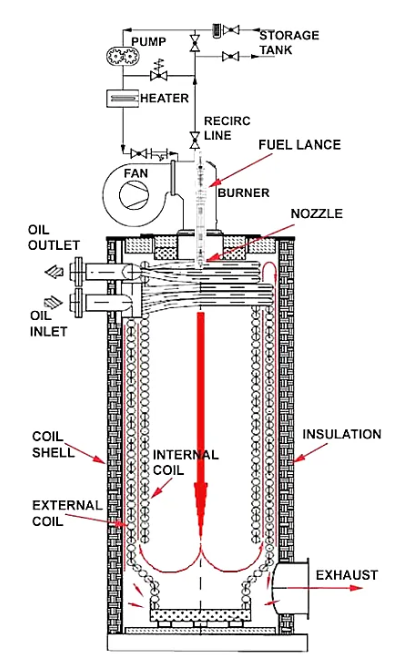
A thermal oil boiler is a reliable industrial boiler that circulates hot oil in its chambers to facilitate heat exchange for various industrial operations. Its primary goal is to enable effective heat exchange by circulating thermal fluids. As a high-efficiency steam boiler, it efficiently heats the oil, transfers the heat from the oil to the desired location, and then the oil returns to the source to be heated again. This allows for repetitive use of the same oil without the need for constant replacement.
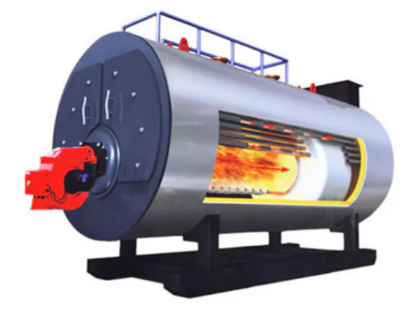
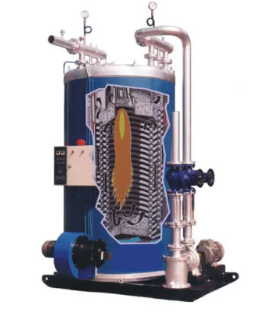
The design of a thermal oil heating system varies significantly based on its use, capacity, and the manufacturer. Thermal oil boilers transfer heat through radiation and convection, and their parts can be divided into two categories based on the working process: radiant parts and convective parts.
Radiant Parts
Responsible for the radiation process, they include combustion chambers, an oil heater body, and an air pre-heater. When fuel enters the feeding system, it burns and heats the thermal oil in the coils. The coil system in the combustion chamber is crucial for radiation, as it helps radiate heat outside. Maintaining the temperature of these coils is vital to prevent blasts and damage, and the coil diameter must be precise for optimal heat exchange.
Convective Parts
Involved in the convection process of heat transfer, which occurs at the interface of the inner and outer coils of the combustion chamber. The placement of these coils is significant in the design. This part is somewhat risky due to its direct connection to both heating coils, so maintaining their temperature is essential to prevent sparks and fires.
A thermal oil boiler consists of various components to ensure high efficiency:
- Feeding System: Comprises buckets, conveyors, excavators, etc., to automatically transfer fuel into the boiler, being the first step in the working process.
- Combustion Chamber: Where fuel burns, producing ash that goes into the ash pit. It requires air (entering through air slots at the back) for combustion and contains two concentric coils that absorb energy from hot thermal fluid, enhancing efficiency. These coils can be in series or parallel, and they are thermally insulated to retain heat.
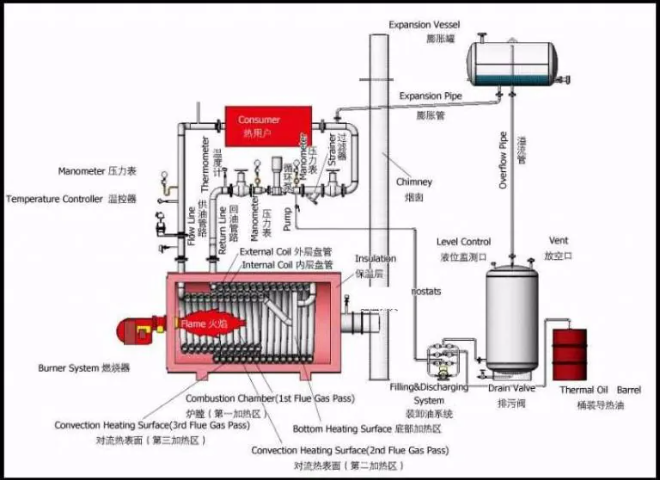
- Industrial Oil Heater Body: Located above the combustion chamber, it has heat exchange pipes and oil tubes. Hot smoke from the combustion chamber enters the hot oil tubes, heating the thermal oil. Maintaining proper oil velocity and using the right thermal fluid is crucial to prevent fires.
- Air Pre-heater: Supplies air to the combustion chamber via fans at the back. It provides excess oxygen for efficient combustion, reduces ash production, and helps maintain the combustion chamber temperature to prevent blasts.
- Exhaust Treatment System: Treats dangerous exhaust fumes before releasing them into the environment. The treatment method (such as wet filter, dry filter, venturi, bag filter, or electrostatic dust filter) depends on the type of thermal fluid used.
- The System Of Collecting Ash: Most ash from burned fuel (like coal or wood) is discharged into a water tank to cool, then collected with dragging chains. Remaining ash accumulates in the exhaust treatment system as fumes and smoke.
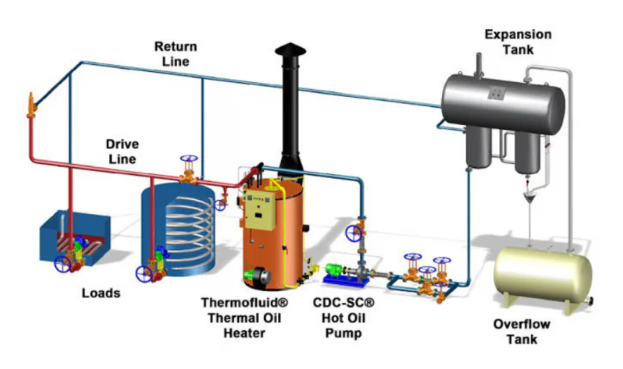
- Circulating Oil Pump System: Transfers heated oil from the oil heater body to factory lines and pulls it back for reheating, operating in a closed continuous cycle. The correct size of the pump is essential, determined by thermal oil heater capacity calculation, to avoid damage or inefficiency.
- Oil tank system and expansion oil tank: A simple oil tank, usually underground, stores oil during boiler repair or cleaning. The expansion oil tank, above the oil heater body, collects expanding oil when heated, preventing waste and potential issues from boiling oil leaving the heater.
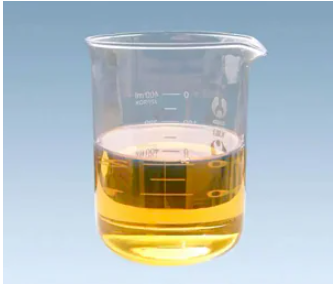
Thermal oil is a low-viscosity hot fluid that transfers heat from combustion to the factory production system.
- Characteristics Of Thermal Oil
- Low viscosity: Facilitates easy heating and pumping, ensuring efficient results.
- Quick heating: Saves time and increases production rate.
- Easy heat transfer: Has a high heat transfer rate, boosting production.
- Low vapor power: Reduces expansion and rising, preventing explosions.
- Low chemical reactivity: Avoids chemical reactions inside the boiler.
- Less explosive: Minimizes fire risks.
- Cost efficiency: Affordable for profitable operations.
- Quick cooling: Prevents excessive temperature buildup.
- Process Of Selection
- The fluid should be lightweight and easy to pump.
- Its efficiency in absorbing and releasing heat must be considered.
- The pressure handling capability of the boiler should be matched with the thermal oil's pressure requirements.
- Price is a factor; choose oil that maximizes yields with minimum capital.
While steam is used for industrial heating, it has limitations. Thermal oils overcome these by working at high temperatures with maximum heat exchange. They offer more reliable temperature control with uniform temperatures, and operate at lower pressure, reducing explosion risks.
Safety is a core design aspect. Features include:
- Insulation around the combustion chamber to prevent heat transfer to surroundings.
- Welded and seamless piping to prevent oil leaks.
- An expansion tank to stop oil from boiling and spreading, avoiding severe accidents.
- A water tank and cooling fans to quickly lower excessive system temperatures.
A thermal oil boiler is an excellent, reliable, and convenient heat transfer option for industries, with more safety features and lower manual labor requirements. When choosing one, look for companies offering complete usage strategies and testing samples. There are various options available at reasonable prices, and customer support can provide guidance for those in need.
 English
 العربية
 中文語言
中文語言
 हिंदी भाषा
 हespañol
 русский
 Português
 Le français
 Deutsch
 ภาษาไทย
 Português

Add New Comment