 English
 العربية
 中文語言
中文語言
 हिंदी भाषा
 हespañol
 русский
 Português
 Le français
 Deutsch
 ภาษาไทย
 Português

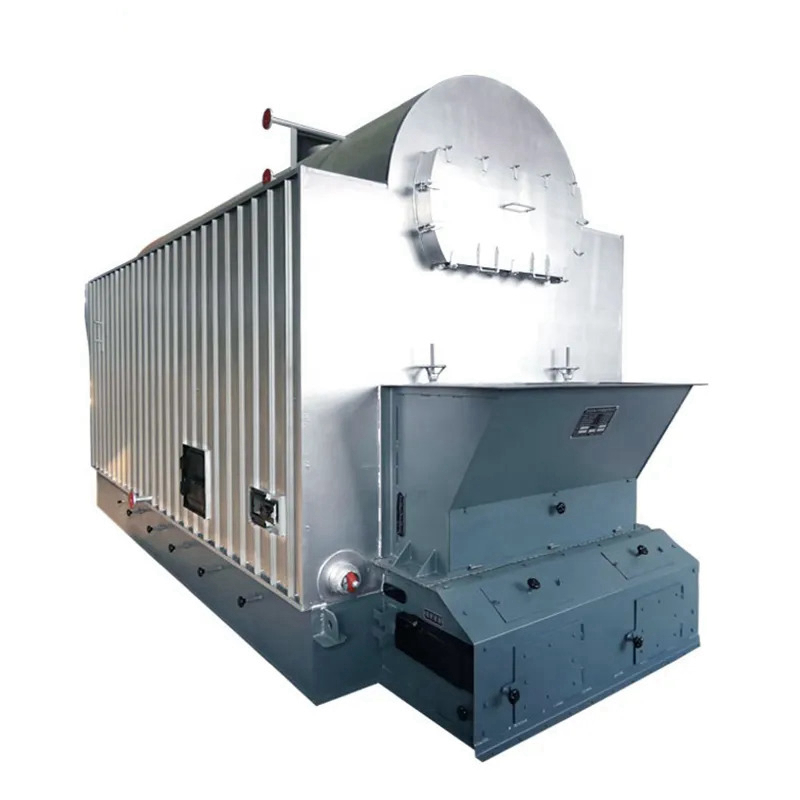
Is a Biomass Boiler System Worth It?
By YONGXING Boiler
When it comes to heating efficiency with reduced emissions and low carbon footprints, biomass boiler systems cannot be ignored. These units have gained considerable popularity among small businesses and residential communities due to their ability to produce low waste and manage carbon dioxide in the atmosphere.
Biomass boilers come in various sizes, shapes, installation technologies, and fuel types, making it challenging to find the right one. To assist you in making a choice, here is an in-depth guide on biomass boiler systems covering their working principle, efficiency, emissions, and cost.
How Does a Biomass Boiler System Work?
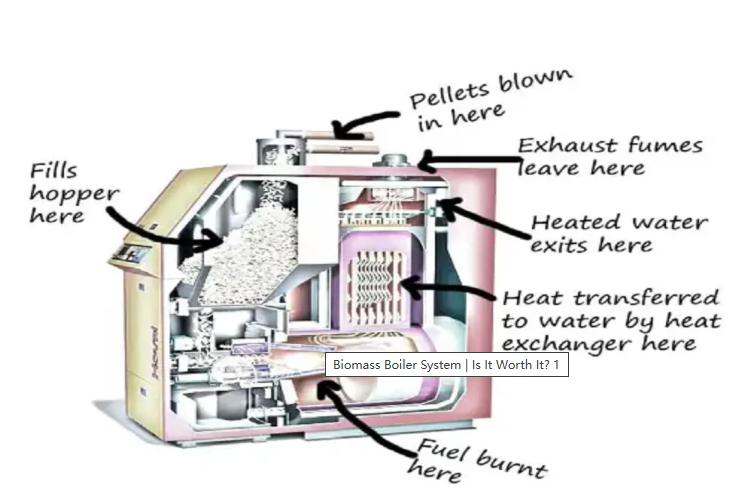
The operation of a biomass boiler involves several steps:
- First Phase
Biomass boiler systems function similarly to traditional boilers, generating heat by combusting non-fossil fuels. They are larger than other boilers because the fuel used in the chambers is in large volume, which takes up more space. - Second Phase
The fuel for a typical biomass boiler system includes wood pellets, wood chips, and logs. This fuel is fed into the combustion chamber to start the process. The feeder can be automatic, semi-automatic, or manual, depending on the working facility and budget. - Third Phase
Once the fuel is ignited in these chambers, it generates hot gases. These hot gases pass through the flue and into the heat exchanger chamber. During this process, the hot air in the chambers heats the water, which then converts to steam and is transferred to industrial equipment. - Fourth Phase
Finally, the by-product ashes are discarded into a separate tray, and the leftover heat is stored in thermal storage containers, also known as thermal tanks or buffer vessels. To make the process convenient, it is advisable to always have a bulk supply of fuel on-site. This reduces the cost of frequently transporting heavy wood logs and pellets.
Biomass Boiler For Home
Biomass boiler systems are an ideal choice for homeowners seeking a more sustainable and efficient heating system. These boilers utilize natural sources such as wood pellets, chips, logs, and other organic materials to generate heat.
Using biomass systems in homes is an excellent way for homeowners to reduce their carbon footprint. Unlike traditional oil and gas boilers, biomass boilers do not rely on fossil fuels; instead, they are powered by renewable sources. As a result, they are much more environmentally friendly, emitting fewer pollutants.
They are an excellent option for homeowners looking for a more efficient, sustainable, and low-maintenance heating system. With their low emissions and high efficiency, biomass boilers are an ideal way to reduce your carbon footprint while still providing reliable heat to your home.
Combustion Process of a Commercial Biomass Boiler System
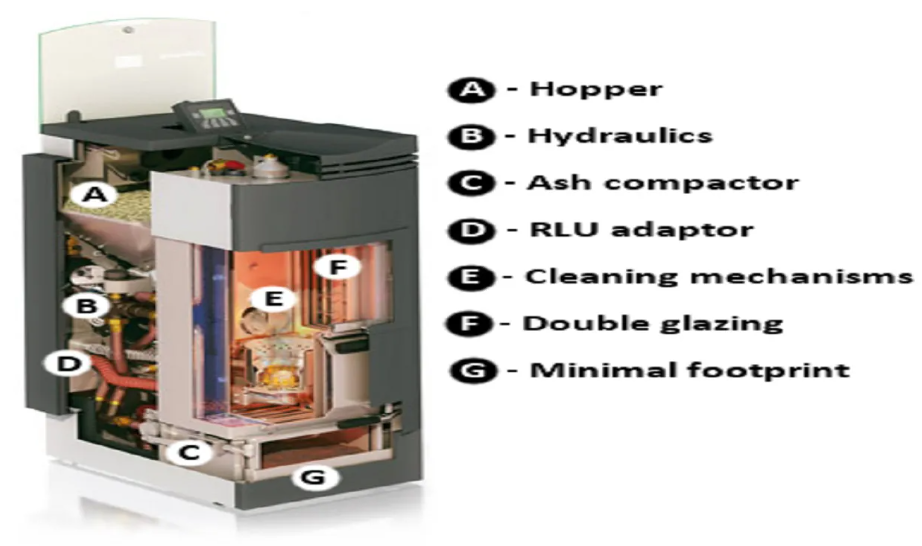
Biomass steam boilers for commercial areas are a great way to reduce the carbon footprint, lower electricity costs, and produce clean heat energy. They are currently used in both public and private industrial sites. It is estimated that the largest 500 MWth boiler plant in a large facility can increase heating efficiency by up to 89%.
The Combustion Process
The combustion process is based on four primary units: the feeding system, combustion chamber, air supply, and ash discharge. In industrial setups, it is further accompanied by a gas recirculation (FGR), an automatic controller, and a separate heat exchanger.
However, the installation techniques used for each facility determine the efficiency and the type of fuel to use. For example, most facilities use moving-grate furnaces that can utilize all sorts of homogeneous fuel. In contrast, those with rotating and circulating beds are limited to woodchips, bark, and sludge.
| Installation Technology | Fuel Type |
|---|---|
| Moving-Grate Systems | All Fuels (Homogenized) |
| CFB (Circulating Fluidized Bed) | Small Materials (bark, woodchips, and sludge) |
| PF (Pulverized Wood Boilers) | Small and Dry (pellets, sawdust, and wood) |
| Pulverized Coal-Wood Burners | Small and Dry (pellets and sawdust) |
Factors that Determine the Efficiency of a Wood chip Boiler
The efficiency of a biomass boiler depends on several factors, including fuel quality, fuel type, emission value, and temperature regularities within the system. Here are 3 critical factors that can influence the heating efficiency of your installed commercial boiler:
- Flue Gas Temperature
Flue gases are the gases that leave the chamber during combustion. They are responsible for producing heat and keeping the water hot. To determine efficiency, the difference between the initial temperature and the flue temperature is considered. If the gases are still hot when leaving the chamber, it means they have not transferred their heat to the water, resulting in heat loss. Therefore, it is ideal for industries to have separate maintenance setups to prevent such heat loss. - Type of Biomass Fuel
On average, a typical biomass boiler system has an efficiency of around 80-90% compared to other conventional heating setups. However, a large part of this efficiency depends on the type of fuel used for residential and industrial sites. Here is a breakdown of the most commonly used fuels, their moisture levels, and energy efficiency:
| Type of Fuel | Energy per Ton (Moisture Content) |
|---|---|
| Wood Chips | Around 4800 kWh (10-15%) |
| Wood Logs | Around 3500 kWh (25-30%) |
| Wood Pellets | Around 4800 kWh (5-8%) |
| Saw Dust | Around 1500 kWh (less than 20%) |
- Emission Level
In simple terms, low emissions mean better heating efficiency. The emissions produced by commercial biomass boiler systems can be divided into CO₂, NOₓ, and PM, and they are determined by the quality of the fuel used.
Overall, the carbon footprint and nitrogen emissions of a biomass boiler are negligible, which is directly proportional to the energy efficiency of the system. However, the possibility of high PM emissions is one of the biggest concerns, especially in urban industrial setups.
- CO₂: It is a known fact that burning wood materials produces a high amount of carbon dioxide, given their high calorific value. However, studies show that the CO₂ emitted from burning biomass is already part of the natural atmospheric carbon cycle. Hence, you will see companies claiming that biomass boiler fuel is carbon neutral or has a low carbon footprint.
- NOₓ: When it comes to NOₓ emissions, a large part is determined by the quality of the fuel used. For example, small dry pellets are known to have low emissions, typically between 50 and 60 mg/MJ. In contrast, chip boilers emit around 170 or 180 mg/MJ. In either case, the emissions are negligible, which keeps the efficiency of the biomass boiler system intact.
- PM (Particulate Emissions): Biomass fuel tends to have more particulate emissions than natural gas. When compared to fuel oil, there is not much difference. A typical modern industrial biomass boiler system can produce emissions between 10 and 70 mg/MJ, which is quite similar to the value produced by oil.
However, using low-quality wood and incorrect equipment can increase this value in commercial settings. When these boilers are located in urban areas, air quality is compromised. To prevent this, most facilities use ceramic filters to keep these emissions low and improve the boiler's efficiency.
4.Thermal Storage Capacity
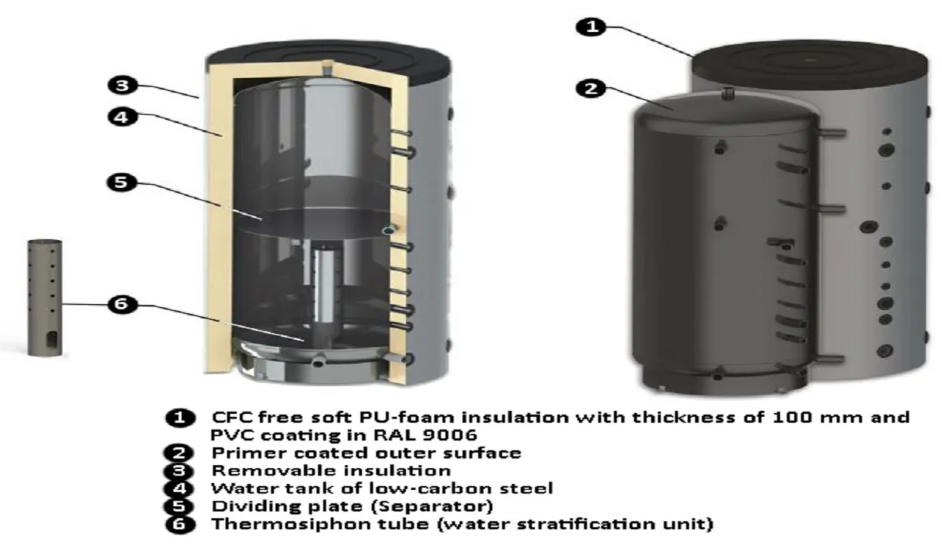
Thermal storage is another critical element of any conventional or biomass steam boiler system. Simply put, it is the space that allows boilers to store heat energy, which can ultimately extend the boiler's working life. High thermal storage means better heating efficiency and low emissions. Each boiler unit comes with buffer tanks that act as a battery to store this energy.
A study conducted by the ACS publication showed that having large thermal storage can reduce cycling rates and emissions. It stated that the efficiency of a 25 KW modern biomass boiler was increased to 74% with a buffer tank, compared to 57% without one. However, a drawback of biomass boiler systems is that having a separate buffer container can add to their already large size.
Cost of a Biomass Boiler
Here is a breakdown of the expected costs for basic residential and commercial biomass boiler systems:
Installation Cost
Buying and installing a biomass boiler can be expensive, especially for residential sites. The price difference is determined by its size and whether it has an automatic or manual feeder. A 15kW boiler is suitable for both residential spaces and small businesses. An automatic one can cost around $16,000-$18,000, while a manual one would cost around $11,000-$13,000.
Seems like a lot, right? Not to worry anymore. You can skip the installation cost if you buy from our company. So, you can save up to $18,000 on a single purchase. All you need to do is contact our customer support and provide your requirements.
Next, you should contact the relevant bodies responsible for offering grants. This could include local councils, energy companies, or government departments. Your grant advisor should be able to provide you with detailed information about the grant and the application process.
Once you have obtained the necessary information, you should complete the application form. Make sure to include all required information and any supporting documents. If you have any questions or need help with the process, the relevant authority should be able to assist.
Finally, you should submit your application.
You should receive a response within a few weeks. If your application is successful, you will receive the grant and be able to use it to purchase a biomass boiler.
You can successfully apply for a biomass boiler grant by following these steps. Good luck!
Conclusion
Biomass boilers are known for their minimal waste production and low carbon footprint, which is why most businesses and industrial setups are turning to them. However, choosing one that meets your specific requirements can be a challenge. So, before selecting any biomass boiler system for your firm, make sure to consider everything from maintenance costs to installation space, efficiency, and design.
Add New Comment