 English
 العربية
 中文語言
中文語言
 हिंदी भाषा
 हespañol
 русский
 Português
 Le français
 Deutsch
 ภาษาไทย
 Português

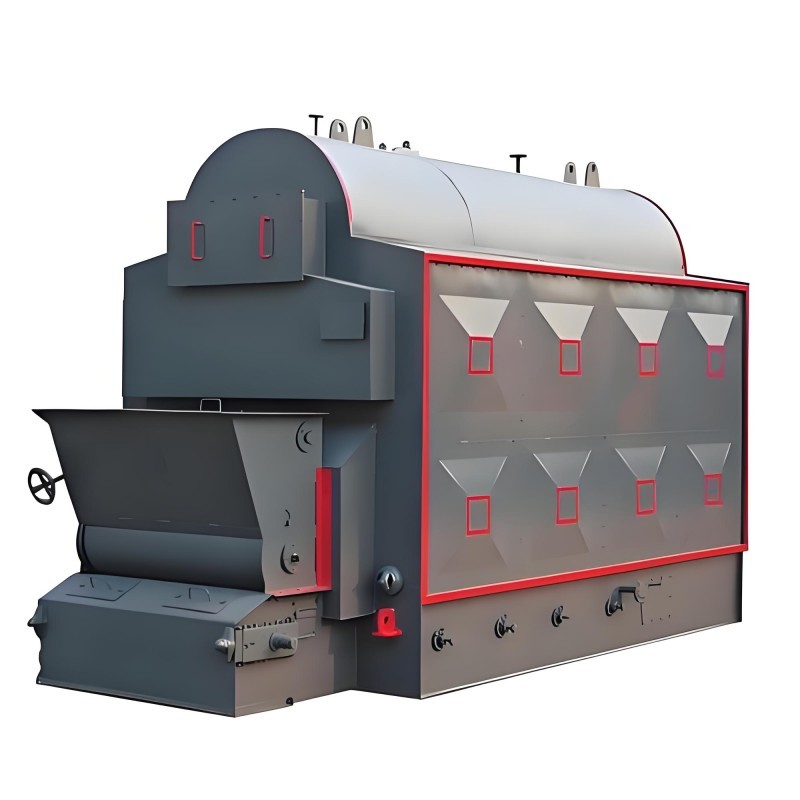
Coal-Fired Steam Boilers: Sustained Significance, Innovations, and Design Features
The Enduring Role of Coal-Fired Steam Boilers
Contrary to the belief that coal-fired steam boilers will soon be replaced by new energy sources and gas, they remain a vital part of the energy market. New energy sources currently face challenges in access stability, efficiency, and cost, making a full replacement of coal a distant prospect. Gas, too, is an unstable heat source. Thus, coal-fired boilers will continue to hold a major market position for the foreseeable future.
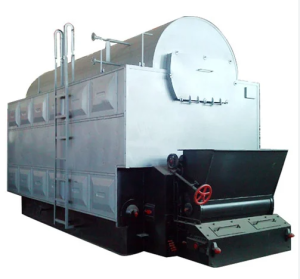
Reasons to Choose Coal-Fired Boilers
- Stable Supply: As a fossil fuel with substantial reserves, coal ensures a reliable, convenient, and continuous supply, standing out in the energy sector.
- Cost-Effectiveness and Efficiency: Compared to natural gas, coal is more economical. The high cost and potential risks of natural gas pipeline construction further highlight coal's advantages. Coal-fired boilers can work alongside biomass boilers, boosting enterprises' production efficiency and gaining popularity in industrial and power sectors.
- Mature Technology: With over half a century of development, coal-fired boilers have undergone numerous technological advancements, reaching a high level of maturity. The industry has a pool of experienced professionals and technicians who provide timely and expert service support, lowering technical thresholds and operational risks for heating and industrial heat supply.
- Industrial Support: A stable energy supply is critical for heavy industries and energy-intensive fields such as thermal power, chemicals, cement, steel, papermaking, food, and textiles. Coal-fired boilers are often the preferred choice in these sectors.
- Continuous Innovation: Modern coal-fired boilers integrate various new technologies to achieve hotter and cleaner combustion, better thermal energy utilization, and easier operation.
Innovations in Coal-Fired Boilers
- New Energy Savers: Featuring condenser designs that recover heat from new sources, enhancing energy efficiency. These innovative condensers address the low heat dissipation efficiency and high energy consumption of traditional ones. By optimizing the heat dissipation structure and improving heat transfer efficiency, they ensure stable and reliable operation, bringing significant economic benefits to enterprises.
- Desulfurization and Denitrification Technology: Reduces harmful gas emissions, contributing greatly to environmental protection. Through chemical reactions, sulfur and nitrogen compounds from coal combustion are converted into harmless substances, aligning with green trends and enhancing enterprises' social reputation.
- Improved Boiler Structure: Expands the combustion area of chain grates and the contact area between downcomers and heat sources, increasing the heating area and thermal energy utilization. A larger chain grate combustion area ensures fuller fuel combustion, improving efficiency, reducing fuel use and harmful emissions, and stabilizing operations. More contact between downcomers and heat sources enhances heat transfer, generating more useful heat under the same conditions.
- Dust Removal Methods: Utilizes ceramic multi-tube dust collectors, cyclone dust collectors, water film dust collectors, and bag dust collectors. These effectively reduce smoke concentration, improving air quality and protecting the ecological environment. Each method works through distinct mechanisms: inertial collision for ceramic multi-tube ones, cyclone effects for cyclone types, water film adsorption for water film devices, and filter material filtration for bag collectors.
- Fully Imported PLC Intelligent Control System: Elevates the intelligence and automation of coal-fired boilers. Equipped with advanced control systems and sensor technology, it monitors key parameters like temperature, pressure, and flow in real-time. It automatically adjusts fuel supply, air volume, and water level to ensure stable operation and efficient energy conversion. Remote monitoring and fault diagnosis systems enable timely detection and handling of potential issues, enhancing reliability and safety.
Design Features of DZL Coal-Fired Steam Boilers
Core Design Features
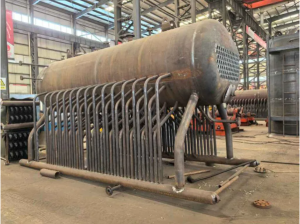
The DZL coal-fired steam boiler adopts a single-cylinder, longitudinal chain grate design. The "single-cylinder" refers to a single horizontal cylinder inside, differing from double-boiler designs with a larger upper cylinder and a smaller lower one. "Longitudinal" describes the layout of the water tubes, which are vertical water-cooled walls near the furnace. These walls directly absorb heat from the grate, convert hot water into steam (discharged from the upper horizontal cylinder to provide a stable heat source), protect the furnace from high-temperature erosion, and lower the boiler's external temperature.
The furnace, the core working area, has an internal sawtooth structure that promotes full mixing of coal and air. To prevent high-temperature combustion of the grate, temperature control is vital. A blower at the boiler's bottom ensures a constant flow of fresh air, boosting combustion efficiency.
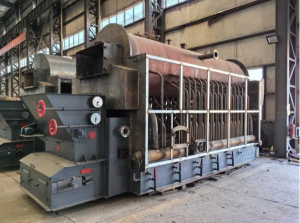
Internal Space Design
High-temperature flue gas emitted through smoke pipes carries much heat; directly releasing it into the air would be wasteful. Thus, an energy saver is typically installed at the furnace exit. Flue gas enters the pipes, and softened water flows through internal water pipes. The softened water is heated by the high-temperature flue gas to a certain temperature before being input into the boiler body, raising the temperature of the incoming hot water and improving the boiler's efficiency.
The chain grate evenly spreads coal and has an automatic speed adjustment box to slowly convey coal backward. During this process, the coal burns gradually, providing a stable feeding method that enhances combustion efficiency.
Conclusion
In terms of safety, the DZL grate system is designed to prevent backfire and ensure complete combustion. It precisely controls the grate's operating speed and dynamically adjusts the ratio of primary to secondary air, effectively regulating combustion speed and temperature, and significantly reducing harmful gases and particulate matter from incomplete combustion.
For cinder cleanup and daily maintenance, an automatic slag remover is included. After coal is fully burned, waste slag in the furnace is automatically directed to the remover, which uses scraper or screw devices to fully automatically transport cinders outside the boiler.
Coal-fired boilers offer numerous other advantages, suitable for both large and small tonnages. If uncertain about the required structure or output capacity, our engineers can provide custom solutions.
Add New Comment